編輯:關於android開發
上一章學習了AlertDialog,後來發現還有基於Layout文件的AlertDialog。可以自己排好位置,相對復雜一點。
先看看效果
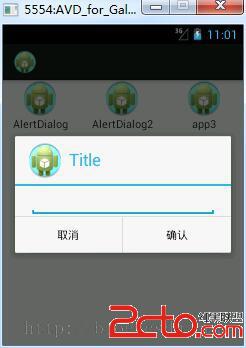
圖中已經按布局文件排好位置了。
新加了個Layout文件:dialog_layout.xml
然後看看代碼:直接在上一章的基礎上改的代碼,好像有點多。
package com.fable.helloworld;

import android.app.Activity;
import android.app.AlertDialog;
import android.content.Context;
import android.content.DialogInterface;
import android.os.Bundle;
import android.view.LayoutInflater;
import android.view.View;
import android.widget.AdapterView;
import android.widget.AdapterView.OnItemClickListener;
import android.widget.EditText;
import android.widget.GridView;
import android.widget.SimpleAdapter;
import java.util.*;

public class HelloWorldActivity extends Activity {
    @Override
    public void onCreate(Bundle savedInstanceState) {
    	super.onCreate(savedInstanceState);
        setContentView(R.layout.activity_hello_world);  //設置主布局文件
        GridView gridview = (GridView) findViewById(R.id.gridview);

        //創造數據來源
        ArrayList> images = new ArrayList>();
        for(int i=1;i<10;i++)
        {
        	String imageName = "";
        	switch(i)
        	{
        	case 1:
        		imageName = "AlertDialog";//普通的AlertDialog
        		break;
        	case 2:
        		imageName = "AlertDialog2";//基於布局的AlertDialog
        		break;
        	default:
        		imageName = "app"+String.valueOf(i);
        	}
        	HashMap map = new HashMap();
        	map.put("ItemImage", R.drawable.ic_launcher);//添加圖像資源的ID,標識符,值
        	map.put("ItemText", imageName);//按序號做ItemText,標識符,值
        	images.add(map);
        }
        //把數據傳入適配器,轉換成布局需要的數據
        SimpleAdapter simpleAdapter = new SimpleAdapter(this, //上下文為當前Activity
        	images,//數據來源
	        R.layout.my_list_item,//每一項的布局的XML實現
	        new String[] {"ItemImage","ItemText"},//動態數組與ImageItem對應的子項
	        new int[] {R.id.ItemImage,R.id.ItemText});  //ImageItem的XML文件裡面的一個ImageView,兩個TextView ID
        //添加並且顯示
        gridview.setAdapter(simpleAdapter);

        //添加消息處理
        gridview.setOnItemClickListener(new ItemClickListener());
    }


  //當AdapterView被單擊(觸摸屏或者鍵盤),則返回的Item單擊事件
    class  ItemClickListener implements OnItemClickListener
    {
    public void onItemClick(AdapterView arg0,//父視圖
                                    View arg1,//當前視圖
                                    int arg2,//點擊的位置
                                    long arg3//id
                                    ) {

	    	HashMap item = (HashMap) arg0.getItemAtPosition(arg2); //獲取點擊的item
	    	//setTitle((String)item.get("ItemText")); //這個只是把標題改一改,
	    	String itemStr = (String)item.get("ItemText");
	    	if(itemStr.equals("AlertDialog")){
	    		showDialog(HelloWorldActivity.this, itemStr);
	    	}
	    	else if (itemStr.equals("AlertDialog2"))
			{
				showDialogLayout(HelloWorldActivity.this);
			}

    	}
//=========================AlertDialog====================================================
    	private void showDialog(Context context, String itemStr) {

    			//AlertAialog的構造函數是protected的,只能通過Builder函數來構建一個新的對象
    			AlertDialog.Builder builder = new AlertDialog.Builder(context);
                builder.setIcon(R.drawable.ic_launcher);  //設置圖標
                builder.setTitle("我是標題");  //設置標題
                builder.setMessage("這裡是內容啊啊啊啊!!!");//設置內容
                builder.setPositiveButton("Button1",  //確認按鈕
                    new DialogInterface.OnClickListener() {//為了方便,不顯式聲明一個類了
                        public void onClick(DialogInterface dialog, int whichButton) {
                        	setTitle("點擊了對話框上的Button1");
                        }
                    });
                builder.setNeutralButton("Button2",  //中性按鈕
                        new DialogInterface.OnClickListener() {
                            public void onClick(DialogInterface dialog, int whichButton) {
                                setTitle("點擊了對話框上的Button2");
                            }
                        });
                builder.setNegativeButton("Button3",  //否認按鈕
                        new DialogInterface.OnClickListener() {
                            public void onClick(DialogInterface dialog, int whichButton) {
                                setTitle("點擊了對話框上的Button3");
                            }
                        });
                builder.show();  //顯式這個對話框
    	}
//===================基於Layout的AlertDialog================================================
        private void showDialogLayout(Context context) {
        	//LayoutInflater的作用是用來動態加載Layout文件的
            LayoutInflater inflater = LayoutInflater.from(context);
            final View textEntryView = inflater.inflate( R.layout.dialog_layout, null);//動態加載Layout文件
            final EditText edtInput=(EditText)textEntryView.findViewById(R.id.edtInput);//加載之後可以找到其中的控件了
            final AlertDialog.Builder builder = new AlertDialog.Builder(context);
            builder.setCancelable(false);
            builder.setIcon(R.drawable.ic_launcher);
            builder.setTitle("Title");
            builder.setView(textEntryView);
            builder.setPositiveButton("確認",  //這裡又手動加入了按鈕,可以看出,可以混著用的
                    new DialogInterface.OnClickListener() {
                        public void onClick(DialogInterface dialog, int whichButton) {
                            setTitle(edtInput.getText());
                        }
                    });
            builder.setNegativeButton("取消",
                    new DialogInterface.OnClickListener() {
                        public void onClick(DialogInterface dialog, int whichButton) {
                            setTitle("");
                        }
                    });
            builder.show();
        }

    }
}
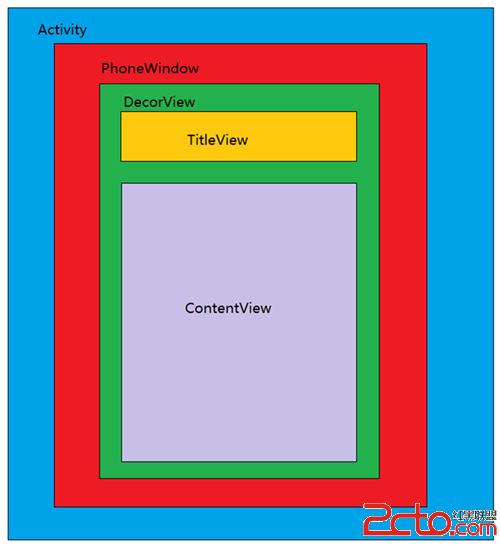 Android View體系(六)從源碼解析Activity的構成
Android View體系(六)從源碼解析Activity的構成 相關文章 Android View體系(一)視圖坐標系 Android View體系(二)實現Vi
 Android手機屏幕大小的獲取,android屏幕獲取
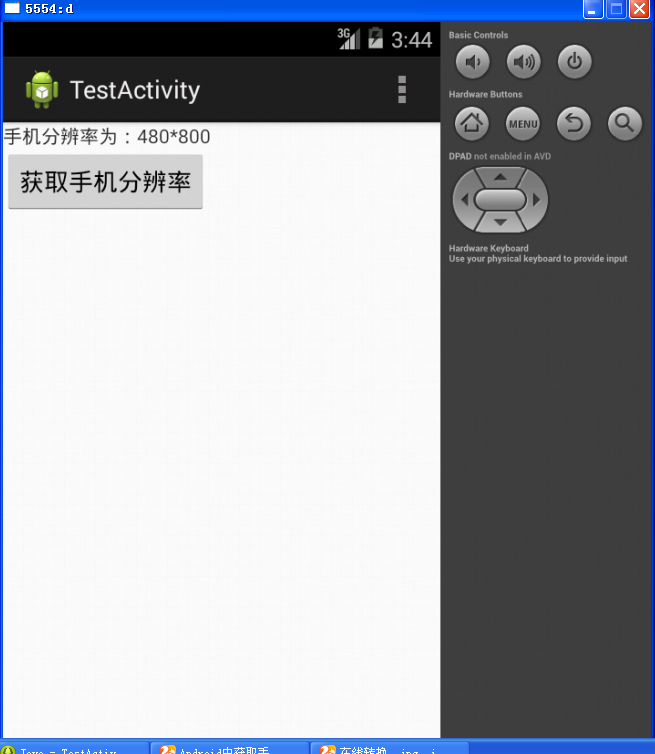
Android手機屏幕大小的獲取,android屏幕獲取package com.example.testactivity; import android.app.Act
 android 嵌套的listview示例(可參考實現朋友圈評論)
android 嵌套的listview示例(可參考實現朋友圈評論) 最近在項目中用到listview中再嵌套一個listview,兩層也有監聽,都沒有問題。其實,主要
 android GridLayout布局,androidgridlayout
android GridLayout布局,androidgridlayout android4.0版本後新增了一個GridLayout,它使用虛細線將布局劃分為行、列和