編輯:關於Android編程
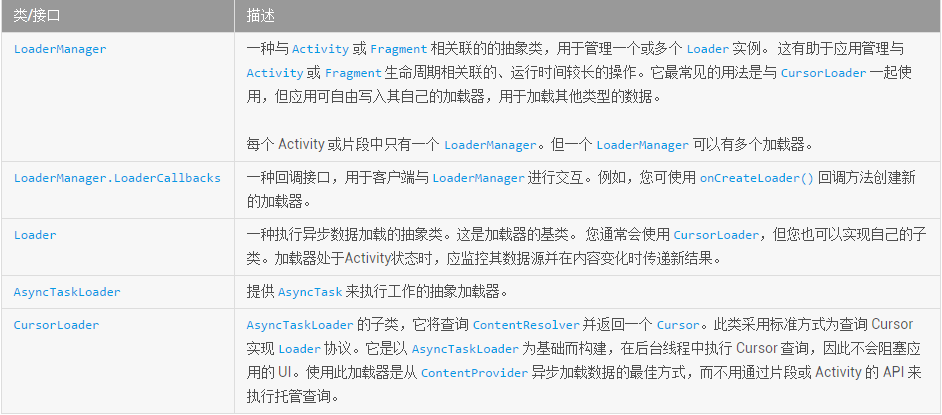 上表中的類和接口是您在應用中用於實現加載器的基本組件。 並非您創建的每個加載器都要用到上述所有類和接口。但是,為了初始化加載器以及實現一個 Loader 類(如 CursorLoader),您始終需要要引用 LoaderManager。下文將為您展示如何在應用中使用這些類和接口。
// Prepare the loader.  Either re-connect with an existing one,
// or start a new one.
getLoaderManager().initLoader(0, null, this);
initLoader(int id, Bundle args, LoaderManager.LoaderCallbacks
public boolean onQueryTextChanged(String newText) {
    // Called when the action bar search text has changed.  Update
    // the search filter, and restart the loader to do a new query
    // with this filter.
    mCurFilter = !TextUtils.isEmpty(newText) ? newText : null;
    getLoaderManager().restartLoader(0, null, this);
    return true;
}
// If non-null, this is the current filter the user has provided. String mCurFilter; ... public Loader(2)onLoadFinishedonCreateLoader(int id, Bundle args) { // This is called when a new Loader needs to be created. This // sample only has one Loader, so we don't care about the ID. // First, pick the base URI to use depending on whether we are // currently filtering. Uri baseUri; if (mCurFilter != null) { baseUri = Uri.withAppendedPath(Contacts.CONTENT_FILTER_URI, Uri.encode(mCurFilter)); } else { baseUri = Contacts.CONTENT_URI; } // Now create and return a CursorLoader that will take care of // creating a Cursor for the data being displayed. String select = "((" + Contacts.DISPLAY_NAME + " NOTNULL) AND (" + Contacts.HAS_PHONE_NUMBER + "=1) AND (" + Contacts.DISPLAY_NAME + " != '' ))"; return new CursorLoader(getActivity(), baseUri, CONTACTS_SUMMARY_PROJECTION, select, null, Contacts.DISPLAY_NAME + " COLLATE LOCALIZED ASC"); }
// This is the Adapter being used to display the list's data. SimpleCursorAdapter mAdapter; ... public void onLoadFinished(Loader(3)onLoaderReset 此方法將在先前創建的加載器重置且其數據因此不可用時調用。 通過此回調,您可以了解何時將釋放數據,因而能夠及時移除其引用。loader, Cursor data) { // Swap the new cursor in. (The framework will take care of closing the // old cursor once we return.) mAdapter.swapCursor(data); }
// This is the Adapter being used to display the list's data. SimpleCursorAdapter mAdapter; ... public void onLoaderReset(Loaderloader) { // This is called when the last Cursor provided to onLoadFinished() // above is about to be closed. We need to make sure we are no // longer using it. mAdapter.swapCursor(null); }
public static class CursorLoaderListFragment extends ListFragment
        implements OnQueryTextListener, LoaderManager.LoaderCallbacks {

    // This is the Adapter being used to display the list's data.
    SimpleCursorAdapter mAdapter;

    // If non-null, this is the current filter the user has provided.
    String mCurFilter;

    @Override public void onActivityCreated(Bundle savedInstanceState) {
        super.onActivityCreated(savedInstanceState);

        // Give some text to display if there is no data.  In a real
        // application this would come from a resource.
        setEmptyText("No phone numbers");

        // We have a menu item to show in action bar.
        setHasOptionsMenu(true);

        // Create an empty adapter we will use to display the loaded data.
        mAdapter = new SimpleCursorAdapter(getActivity(),
                android.R.layout.simple_list_item_2, null,
                new String[] { Contacts.DISPLAY_NAME, Contacts.CONTACT_STATUS },
                new int[] { android.R.id.text1, android.R.id.text2 }, 0);
        setListAdapter(mAdapter);

        // Prepare the loader.  Either re-connect with an existing one,
        // or start a new one.
        getLoaderManager().initLoader(0, null, this);
    }

    @Override public void onCreateOptionsMenu(Menu menu, MenuInflater inflater) {
        // Place an action bar item for searching.
        MenuItem item = menu.add("Search");
        item.setIcon(android.R.drawable.ic_menu_search);
        item.setShowAsAction(MenuItem.SHOW_AS_ACTION_IF_ROOM);
        SearchView sv = new SearchView(getActivity());
        sv.setOnQueryTextListener(this);
        item.setActionView(sv);
    }

    public boolean onQueryTextChange(String newText) {
        // Called when the action bar search text has changed.  Update
        // the search filter, and restart the loader to do a new query
        // with this filter.
        mCurFilter = !TextUtils.isEmpty(newText) ? newText : null;
        getLoaderManager().restartLoader(0, null, this);
        return true;
    }

    @Override public boolean onQueryTextSubmit(String query) {
        // Don't care about this.
        return true;
    }

    @Override public void onListItemClick(ListView l, View v, int position, long id) {
        // Insert desired behavior here.
        Log.i("FragmentComplexList", "Item clicked: " + id);
    }

    // These are the Contacts rows that we will retrieve.
    static final String[] CONTACTS_SUMMARY_PROJECTION = new String[] {
        Contacts._ID,
        Contacts.DISPLAY_NAME,
        Contacts.CONTACT_STATUS,
        Contacts.CONTACT_PRESENCE,
        Contacts.PHOTO_ID,
        Contacts.LOOKUP_KEY,
    };
    public Loader onCreateLoader(int id, Bundle args) {
        // This is called when a new Loader needs to be created.  This
        // sample only has one Loader, so we don't care about the ID.
        // First, pick the base URI to use depending on whether we are
        // currently filtering.
        Uri baseUri;
        if (mCurFilter != null) {
            baseUri = Uri.withAppendedPath(Contacts.CONTENT_FILTER_URI,
                    Uri.encode(mCurFilter));
        } else {
            baseUri = Contacts.CONTENT_URI;
        }

        // Now create and return a CursorLoader that will take care of
        // creating a Cursor for the data being displayed.
        String select = "((" + Contacts.DISPLAY_NAME + " NOTNULL) AND ("
                + Contacts.HAS_PHONE_NUMBER + "=1) AND ("
                + Contacts.DISPLAY_NAME + " != '' ))";
        return new CursorLoader(getActivity(), baseUri,
                CONTACTS_SUMMARY_PROJECTION, select, null,
                Contacts.DISPLAY_NAME + " COLLATE LOCALIZED ASC");
    }

    public void onLoadFinished(Loader loader, Cursor data) {
        // Swap the new cursor in.  (The framework will take care of closing the
        // old cursor once we return.)
        mAdapter.swapCursor(data);
    }

    public void onLoaderReset(Loader loader) {
        // This is called when the last Cursor provided to onLoadFinished()
        // above is about to be closed.  We need to make sure we are no
        // longer using it.
        mAdapter.swapCursor(null);
    }
}
 Android 存儲學習之在外部存儲中讀寫文件
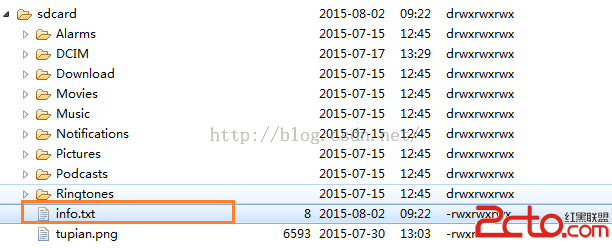
上節學習了如何在手機內部存儲中讀寫文件,本節學習如何在手機的外部存儲中讀寫文件。那就是如何在Sdcard中讀寫文件。那我們還是用以前登錄界面的例子舉例說明,(登錄界面請看
 高仿知乎項目制作流程詳解---第一解:自定義組件的使用
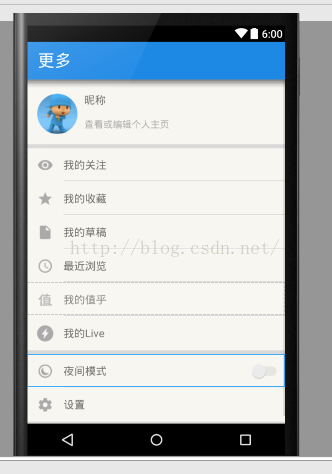
首先來看一下我實現的效果圖: 從”我的關注”開始,每一個條目都是一個自定義組合控件.下面,我來講解一下具體實現步驟: 一.根據
 Android UI設計之(十三)自定義ScrollView,實現QQ空間阻尼下拉刷新和漸變菜單欄效果
之前寫過一篇文章,寫完那篇文章後想趁熱打鐵再寫一篇用ScrollView來實現同樣效果的文章,可是寫了點開頭就沒有繼續寫下去了,當時想的是等用到再寫吧,於是把它扔在了草稿
 策略模式在android中使用
策略模式(Strategy)策略模式是對象的行為模式。它的用意是針對一組算法,將每一個算法封裝到具有共同接口的獨立類中,從而使得它們可以相互替換。策略模式使得算法可以在不