編輯:關於Android編程
與Cookie相似,session也是用來記錄數據和狀態的。
不同在與,cookie記錄數據在客戶端,session記錄數據在服務器端。通過每個浏覽器的特定編號。
(重點)session的兩種實現方式:
1. 通過Cookie實現。(如果浏覽器設置為支持Cookie,則默認為這種方式)
將session的ID存在Cookie裡。
測試程序:
package com.vin.session;

import java.io.IOException;
import java.io.PrintWriter;
import java.util.Date;

import javax.servlet.ServletException;
import javax.servlet.http.HttpServlet;
import javax.servlet.http.HttpServletRequest;
import javax.servlet.http.HttpServletResponse;
import javax.servlet.http.HttpSession;

/**
 * 演示Servlet API中的session管理機制(常用方法)
 * 創建一個session
 * @author Pigeon
 *
 */
public class SessionInfoServlet extends HttpServlet {

    protected void doGet(HttpServletRequest request, HttpServletResponse response) throws ServletException, IOException {

        // Returns the current session associated with this request, or if the request does not have a session, creates one.
        HttpSession mySession = request.getSession(true);

        response.setContentType("text/html");
        PrintWriter out = response.getWriter();
        String title = "Session Info Servlet";
        out.println("<html>");
        out.println("<head>");
        out.println("<title>Session Info Servlet</title>");
        out.println("</head>");
        out.println("<body>");
        out.println("<h3>Session Infomation</h3>");

        // Returns true if the client does not yet know about the session or if the client chooses not to join the session.
        out.println("New Session:" + mySession.isNew() + "<br>");
        // Returns a string containing the unique identifier assigned to this session.
        out.println("Session Id:" + mySession.getId() + "<br>");
        // Returns the time when this session was created, measured in milliseconds since midnight January 1, 1970 GMT.
        out.println("Session Create Time:" + new Date(mySession.getCreationTime()) + "<br>");
        out.println("Session Last Access Time:" + new Date(mySession.getLastAccessedTime()) + "<br>");

        out.println("<h3>Request Infomation</h3>");
        // Returns the session ID specified by the client.
        out.println("Session Id From Request:" + request.getRequestedSessionId() + "<br>");
        // Checks whether the requested session ID came in as a cookie.
        out.println("Session Id Via Cookie:" + request.isRequestedSessionIdFromCookie() + "<br>");
        // Checks whether the requested session ID came in as part of the request URL.
        out.println("Session Id Via URL:" + request.isRequestedSessionIdFromURL() + "<br>");
        // Checks whether the requested session ID is still valid.
        out.println("Valid Session Id:" + request.isRequestedSessionIdValid() + "<br>");

        out.println("<a href=" + response.encodeURL("SessionInfoServlet") + ">refresh</a>");
        out.println("</body></html>");
        out.close();
    }

}
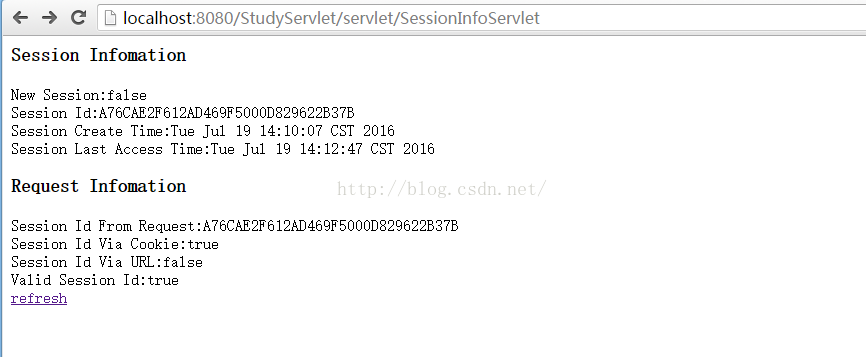
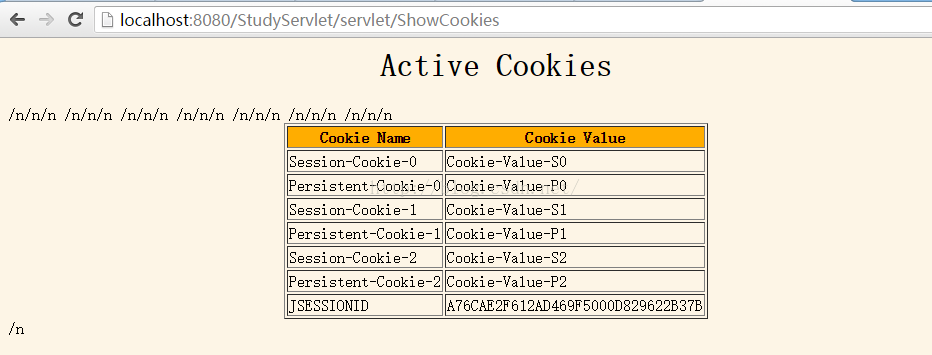
創建了一個session,帶有一個唯一的sessionId,儲存在cookie裡,通過ShowCookies查看。
2. 通過URL重寫來實現。(浏覽器不支持cookie)
就是將一些額外數據(標志符)追加在表示會話的每個URL末尾,服務器在該標志符與其存儲的有關該會話的數據之間,建立對應關聯。如hello.jsp?jsessionid=1234
response.encodeURL()
轉碼URL後加入SessionId 測試程序: 將IE的Cookie禁用,再次運行上面的程序。點擊refresh後,發現url後被加上了jsessionid ---------------------------------------------------------------------------------------------------------------------------------------- session以“name-value”對的形式在服務器的內存中存儲數據 session.getAttribute(String name); session通過name拿到value session.setAttribute(String name, Object value); session設置名值對。 注意:name永遠是String,value是Object,因此需要類型轉換。
package com.vin.session;

import java.io.IOException;
import java.io.PrintWriter;
import java.util.Date;

import javax.servlet.ServletException;
import javax.servlet.http.HttpServlet;
import javax.servlet.http.HttpServletRequest;
import javax.servlet.http.HttpServletResponse;
import javax.servlet.http.HttpSession;

/**
 * Session追蹤
 * 如果浏覽器支持Cookie,創建Session的時候會把SessionId保存在Cookie中
 * 否則必須自己編程使用URL重寫的方式實現Session:response.encodeURL()
 * @author jukey
 *
 */

public class ShowSession extends HttpServlet {

    protected void doGet(HttpServletRequest request, HttpServletResponse response) throws ServletException, IOException {

        response.setContentType("text/html;charset=gb2312");
        PrintWriter out = response.getWriter();
        String str = "Session Tracking Example";
        String heading;

        // 如果會話已經存在,則返回一個HttpSession;否則創建一個新的
        HttpSession session = request.getSession(true);
        // 從當前session中讀取屬性accessCount的值
        Integer accessCount = (Integer)session.getAttribute("accessCount");
        if(accessCount == null) {
            accessCount = new Integer(0);
            heading = "Welcome newUser";
        } else {
            heading = "Welcome Back";
            accessCount = new Integer(accessCount.intValue() + 1);
        }
        // 向當前session中插入鍵(key,屬性)值(value)對
        // Binds an object to this session, using the name specified.
        session.setAttribute("accessCount", accessCount);

        out.println("
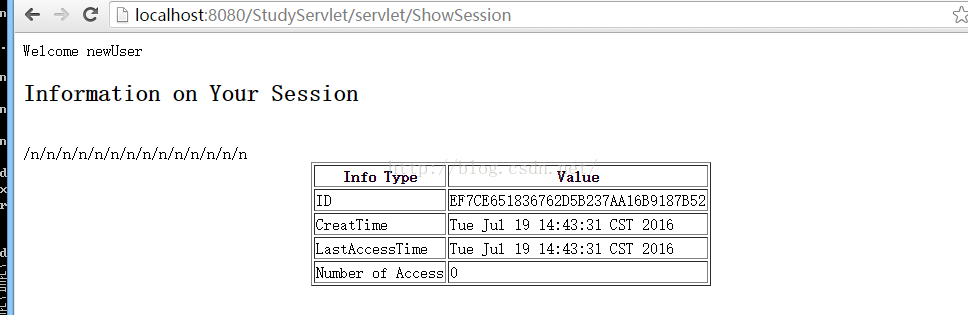
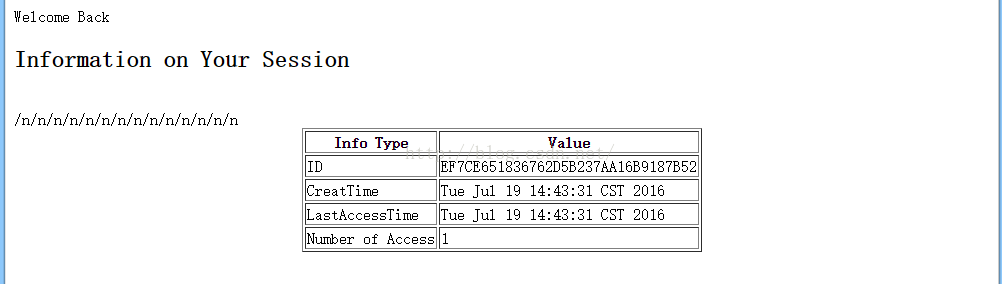
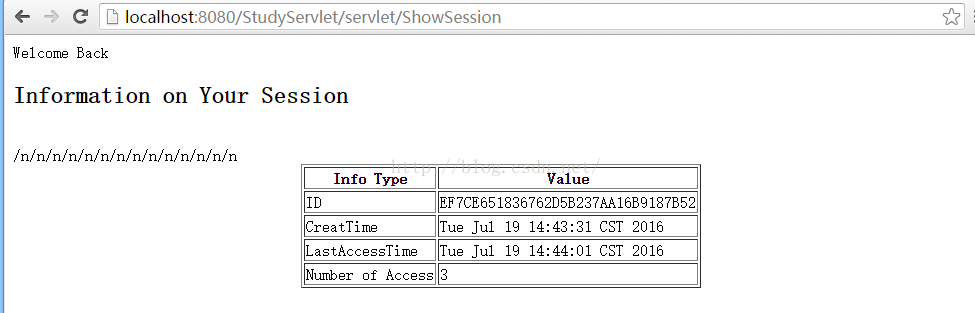 每次刷新,number of access +1。
web.xml
每次刷新,number of access +1。
web.xml
    index.jsp


		HW
		com.vin.servlet.HelloWorldServlet


		HW
		/abc


		TestLifeCycleServlet
		com.vin.servlet.TestLifeCycleServlet


		TestLifeCycleServlet
		/def


		ThreeParams
		com.vin.servlet.ThreeParams


		ThreeParams
		/servlet/ThreeParams


		ShowParameters
		com.vin.servlet.ShowParameters


		ShowParameters
		/servlet/ShowParameters


		SetCookies
		com.vin.cookie.SetCookies


		SetCookies
		/servlet/SetCookies


		ShowCookies
		com.vin.cookie.ShowCookies


		ShowCookies
		/servlet/ShowCookies


		SessionInfoServlet
		com.vin.session.SessionInfoServlet


		SessionInfoServlet
		/servlet/SessionInfoServlet


		ShowSession
		com.vin.session.ShowSession


		ShowSession
		/servlet/ShowSession
 android 屬性動畫入門
前面關於tween動畫寫了2篇博客,如果那2篇博客都看懂了,估計Tween動畫理解使用起來問題就不大,之前也說了Tween動畫的缺點就是在交互上有bug,今天就講下屬性動
 Eclipse搭建android環境
目錄一、安裝JDK.. 11、JDK下載... 12、安裝JDK.. 13、環境變量設置... 3二、安裝Eclipse. 51、Eclipse下載... 52、Ecli
 android項目 之 記事本(12) ----- 圖片的等比例縮放及給圖片添加邊框
本文是自己學習所做筆記,歡迎轉載,但請注明出處:http://blog.csdn.net/jesson20121020 在Android的UI開發中經常會遇
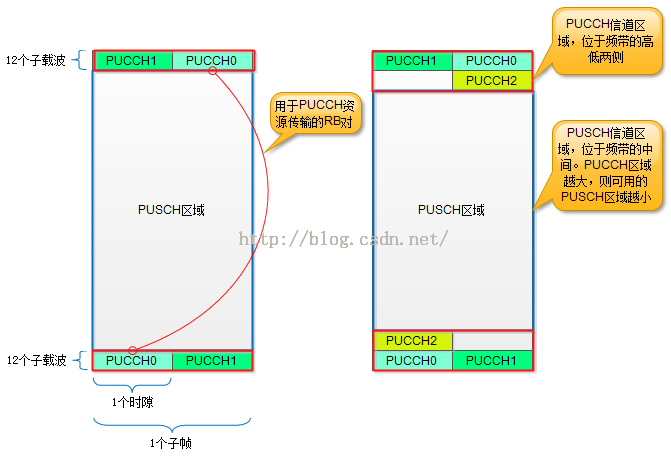 PUSCH上行跳頻(2)-Type2頻率跳頻
1.采用PUSCH跳頻時需要注意的問題在上行子幀中,PUCCH信道處於帶寬的高低兩側,或者說位於頻帶的邊緣,PUSCH信道則位於帶寬的中間。PUCCH信道也以RB對為基本